Washington’s Climate Commitment Act (CCA) requires the state’s largest greenhouse gas emitters to reduce their fossil fuel use by 95% by 2050. Companies that do not comply with the limits are required to purchase additional emissions credits, at prices that are expected to increase over the next two decades. The overall goal of the program is to both reduce emissions by 95%, and fund programs that reduce greenhouse gases and support local communities.
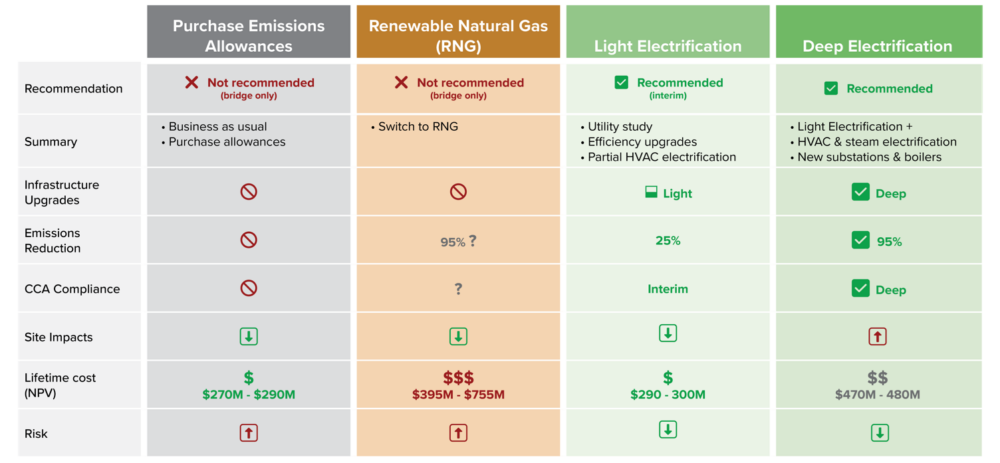
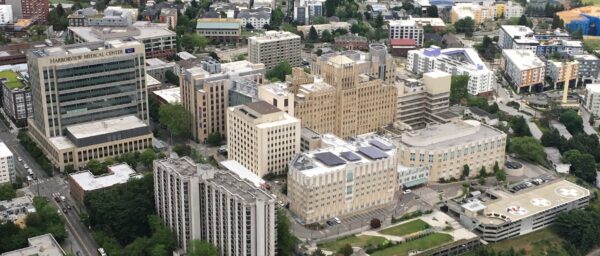
FSi helped a large manufacturing client to chart a path for compliance with these new regulations. We were the prime consultant and mechanical engineer for an in-depth study of the systems serving 4+ million square feet of facilities on the client’s campus. We evaluated potential efficiencies for their gas-fired equipment and the requirements for transitioning most of the site’s gas equipment to electrical alternatives.
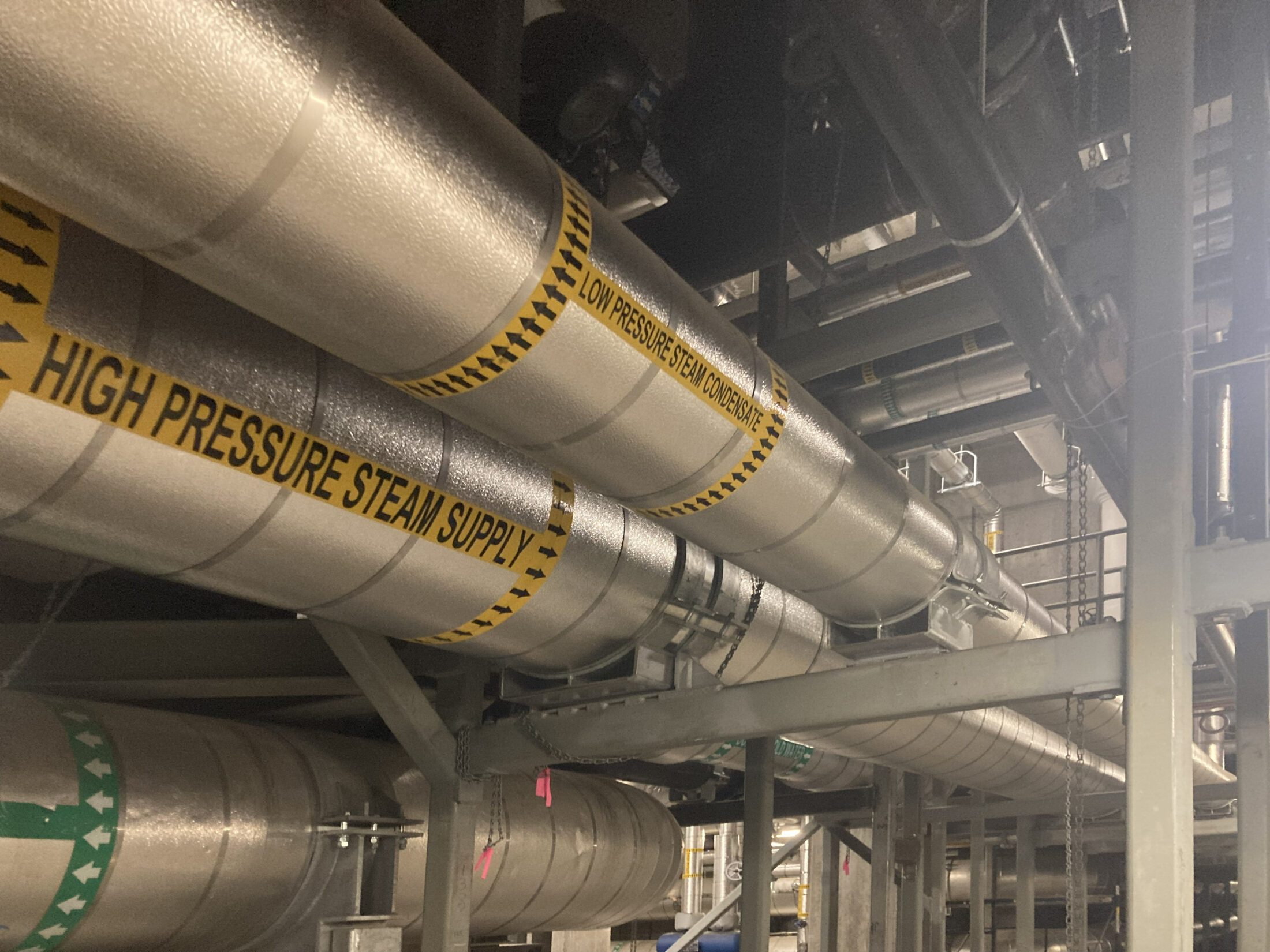
Steam is by far the site’s largest gas user. The site’s steam is generated by gas-fired boilers, and used for manufacturing, as well as comfort heating and domestic hot water. We recommended retro-commissioning the steam system, estimating we can reduce gas use by 10% by eliminating leaks, deadlegs, and poorly-performing equipment. This reduced load means the transformation requires a smaller electrical system. We also recommended replacing domestic hot water and comfort space heating with heat pump equipment as a relatively easy and cost-effective early step, for an additional 15% steam reduction.
For the steam used for manufacturing, our team reviewed multiple electric boiler options and recommended electrode boilers as the most efficient option. We determined that all decarbonization options would increase the electrical load enough to require a new substation. Electric equipment is significantly larger than equivalent gas-fired systems, so we developed multiple siting options for the boilers and substation to limit impacts on competing uses of the site, and manufacturing processes.
The site includes some newer gas boilers with significant remaining useful life. We recommended the owner retain these boilers as emergency back-up power to meet both the 95% fossil fuel reduction and the site’s continuous power needs.
Reducing fossil fuel emissions by 95% will require significant capital investment. Our team developed a report and presentation for facilities staff, who then used the presentation for discussions with capital projects decision-makers to determine how to begin moving towards electrification. The presentation summarized suggested phasing, cost and payback for each phase, and a recommended schedule to comply with the State’s requirements.